Showing posts with label insects. Show all posts
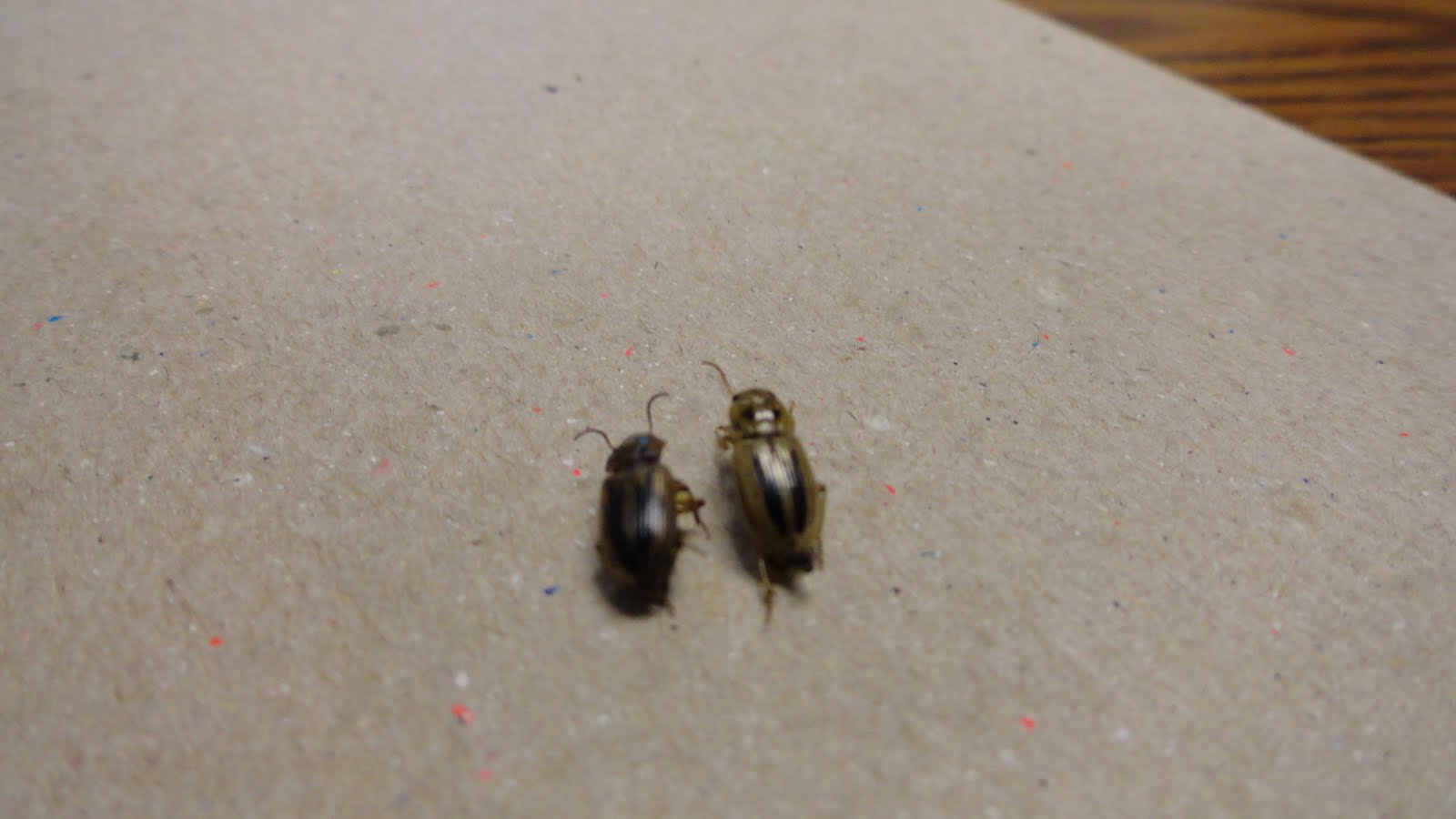
Throughout the past week a beetle has been burrowing in the putting green and creating several little mounds.  These beetles have not been causing any damage to the green, but the mounds are difficult to putt over.

The beetle is the seedcorn beetle.  Other than creating the mounds, we do not foresee any other issues.
We have started sodding a few more areas throughout the course.  Most of these areas are small spots that we were hoping would heal on their own.  Though some of the areas did heal, we were not satisfied with the recovery of others.  These areas include spots on bunker faces and near cart paths.  A few characteristics are shared by these areas, and we believe one or more of these resulted in damage.  One characteristic is they are near cart paths or bunkers resulting in much higher temperatures from the heat radiating off of the asphalt or sand.  Another characteristic is that most are on south facing slopes, also adding to the temperature extreme.

We also know some of the areas suffered from chinch bug damage.  One large area that we will be sodding is the face of the bunker on the right side of 15 fairway.  We know the damage cause to this bunker was from chinch bugs (15 bunker chinch bug damage post).

We began preparing these areas for sod on Monday.  These areas should have sod on them by Thursday depending on what the rain wants to do.
from: Louisiana Rice
 One of the most often quoted lines from the movie Caddyshack among Superintendents and Assistants usually is only used for a laugh among ourselves.  However, today we found Chinch Bugs on the golf course.

"I'll be the head greenskeeper...hopefully within six years.  That's my schedule.  But I am studying this stuff so I know it...you know, like...chinch bugs.  You know...manganese.  A lot of people don't even know what that is...nitrogen."

While there is a species of Chinch bugs (Southern Chinch Bug, pictured) that can cause significant damage to St. Augustinegrass in the far south, the Common Chinch Bug, which we have in this part of the country, is less of a problem.  While I have see damage from Chinch Bugs it has never been extensive enough for control.

Chinch Bugs are insects that have piercing mouthparts that they use to suck juices from the plant.  They feed above ground on the leaves.  The damage from their feeding looks like small dried patches, which can become large areas of dried grass when Chinch Bug populations are high.  We will treat these areas soon that are exhibiting the most excessive damage.

This is a picture of the bunker on the right side of 15 fairway.  The damage on the face of the bunker is the result of a large Chinch Bug population.

Another view of the bunker on the right of 15 fairway.

Here is a picture of 2 Chinch Bugs in the turf canopy.  Click on the picture for a larger view.  The bugs were very difficult to capture.  They are very small and move quickly.  For a size comparison, the sphere in the upper right is a prill of fertilizer from a recent application.

Can you find the Chinch Bug in this picture?
The 8th green has become home to a few cicada killer wasps.  We make an effort to control them as we see them.  These wasps become a nuisance because to the burrowing they do into the green.

Early in the morning we have been noticing piles of sand like this one.  The wasp is burrowing a tunnel into the green to lay eggs.  The wasp chooses the green to burrow because the light sandy soil is easy to burrow through.  You can see a wasp burrowing in the video on the home page of the blog.

The wasp is naturally called a "cicada killer" because it preys on the cicada.  The wasp stings the cicada to kill it, then moves the cicada into the tunnel it has just created on the green.  After the cicada is in the tunnel, the wasp lays its eggs on the cicada for the larva to feed on when they hatch.

This cicada was just off the edge of the green near the burrows.

Here is a picture of the start of a burrow.

The wasps are quite large as you can see in the picture.
Previous PostOlder Posts Home