Showing posts with label aerating. Show all posts
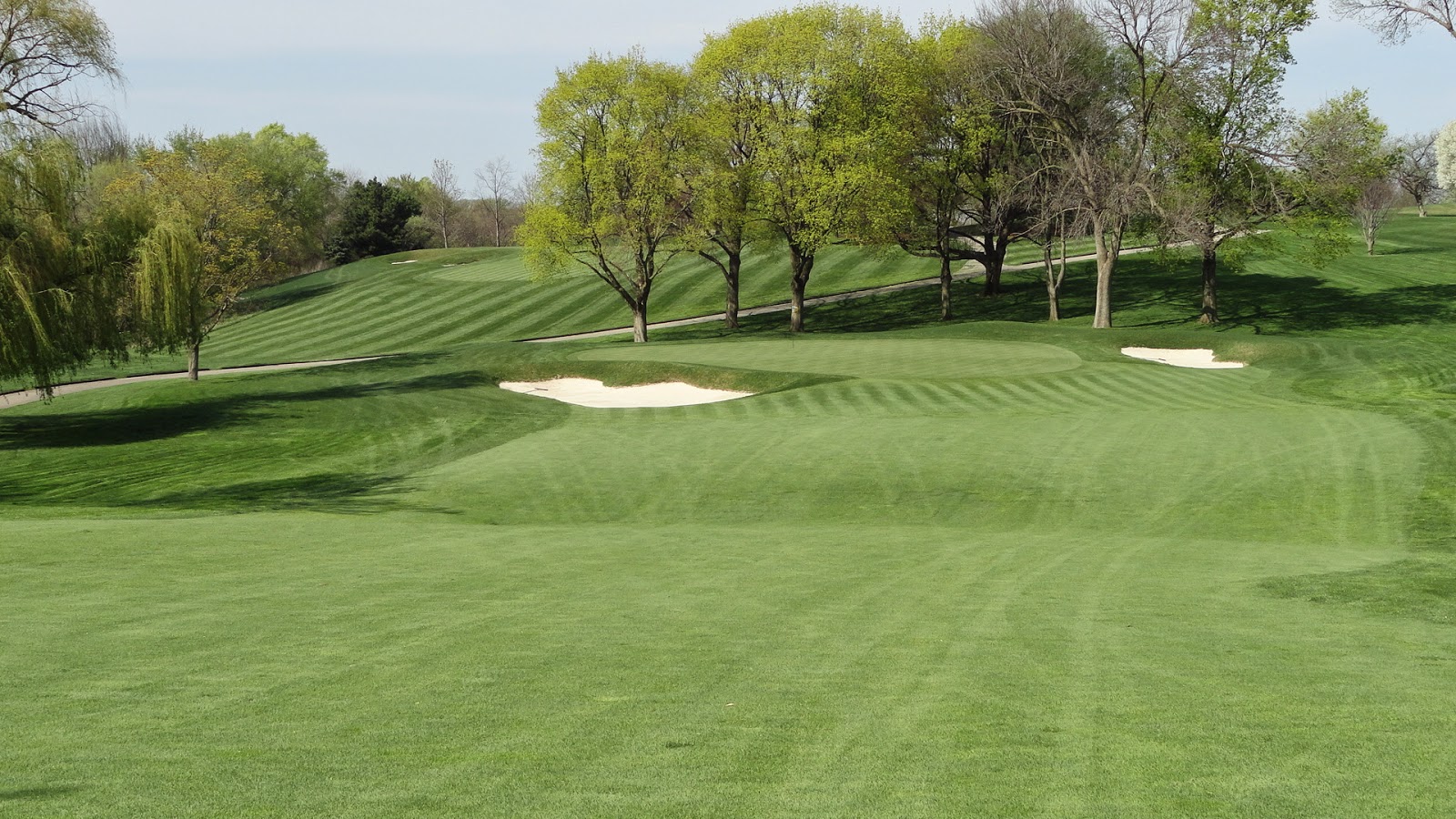
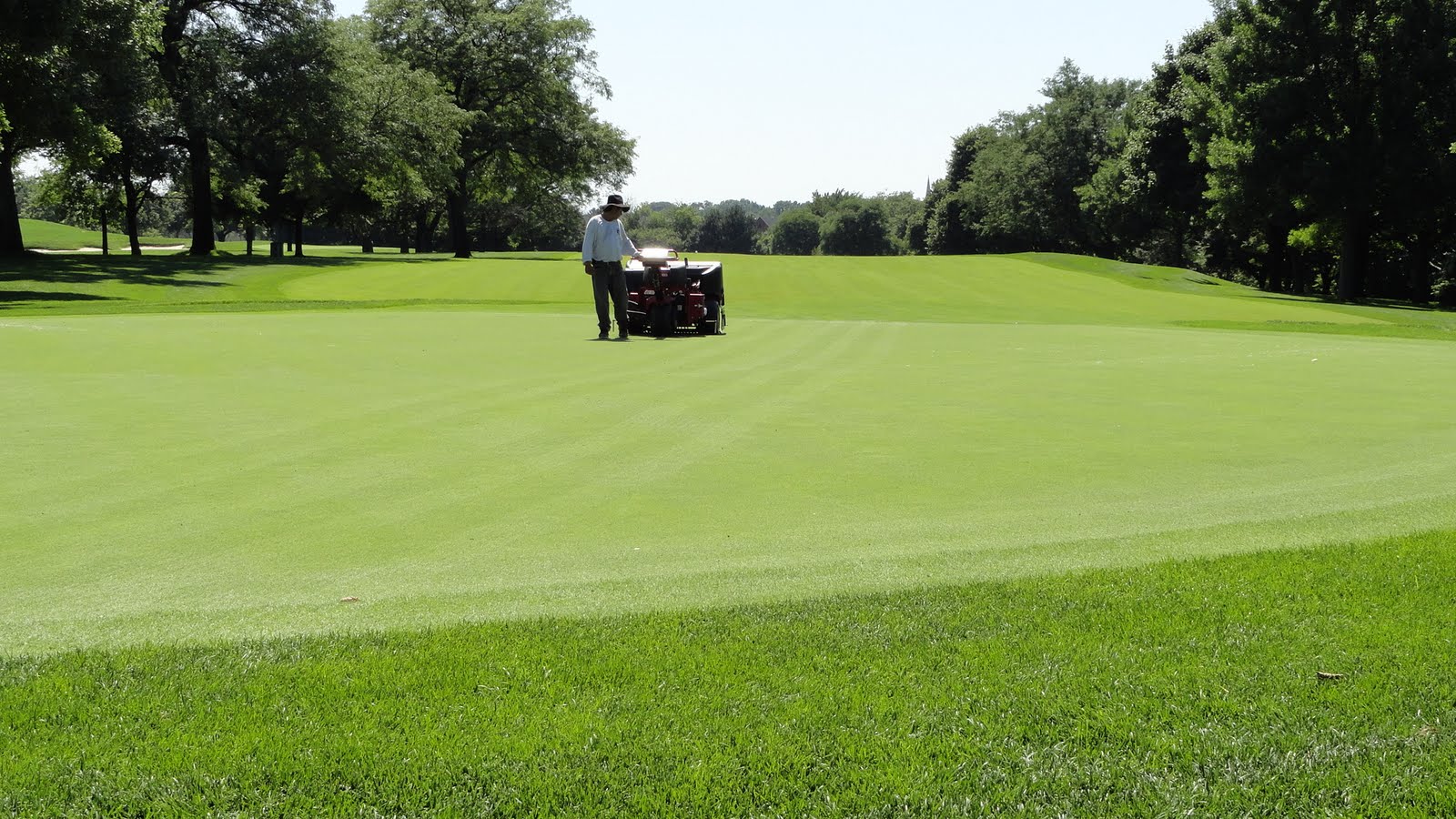
The primary playing surfaces have been cleaned, bunkers raked, and holes cut.  The greens are back in play on Saturday for the 2014 season.  Though the calendar says April 5th, the weather has not acquiesced.  Early spring conditions prevail on the course.  We have also completed our spring aeration, so greens will be sandy, bumpy and slow for the weekend.  The key phrase is "in play", not necessarily "in shape" yet.  The soil has thawed, the grass has greened and they will safely accept traffic, so get out and satisfy your golf cravings in some sunny weather.

Our greens aeration was originally scheduled for April 7th.  However, with the great weather on Monday and Tuesday this week we moved up the aeration to take advantage of the great weather.  As usual, growing conditions will dictate how rapidly the holes will heal.  With some sun, and warmer soil temperatures, it will not take long.

April 2, 2014

March 27, 2012

It is funny to look at the two weather extremes side-by-side.  2012 was a very mild winter with a very early spring.  2014 is the exact opposite.  Warm weather and time will get us to this point.  Unfortunately, we can't control either one.
Our greens were constructed with a sand mixture during the renovation project.  From the previous post, this gives us the benefit of large air spaces in the soil.  Those large air spaces allow for water to move through the soil profile very rapidly and space for roots to grow.  Two very important benefits for an area that is subject to such high demands.

The picture on the right is of a profile from one of the greens.  This profile is an example of how we want the profile to look.  Clean consistent soil throughout the full profile.  We can also gather from this that there exists an excellent root mass in the profile.  The root mass is dense enough to keep the sand profile in tact through the depth the core.  You can even see a tiny root sticking out the bottom of the sample.  Our objective is to keep this profile in this condition over the long-term.  This will allow for the consistent, high-quality playing surface the golfers expect.

Towards the top of the sample on the right, it appears to have a darker color.  This is the organic matter that exist in the soil from the constantly growing turf we talked about is the previous post.  This layer is why we intensively manage the surface with verticutting, topdressing and aeration.

This profile better displays the organic matter layer that is in our greens.  This is typical of greens that have been constructed with a sand.  This organic matter has built up since the greens were constructed.  It is not likely that we will ever be able to completely rid the greens of this organic matter, but we are able to manage its development.  From the previous post, I mentioned that organic matter in the soil has the ability to hold a large amount of water.  Aside from the myriad of agronomic issue that would be created if this organic matter build-up was ignored, the playing surface would become soft, spongy and inconsistent.  The problems arise when the consistent flow of water through the profile is inhibited by the amount of organic matter at the surface.  Our goal is to dilute or remove the organic matter through topdressing or verticutting and aeration.  By consistently incorporating these practices into the management of the greens, we can keep the organic matter at a low enough level to maintain the benefits of the sand based soil and a uniform profile.  This will then allow us to provide the firm and smooth conditions of a high quality playing surface.

This post comes a few days after we completed an aeration of the greens.  This picture shows the new sand channels through the organic matter.  We removed a core from the soil, let it dry, then dragged the sand off the core and back into the soil.  The organic matter that we removed does not break up and we are able to blow the debris into piles and remove it from the green.  These sand channels provide for a more consistent movement of water through the profile.

The consistent movement of water through the profile is the reason these practices are done.  The consistent growth of the grass is the reason that they need to been done as often as possible.
We were able to complete the majority of our scheduled greens aeration today.  We have cored and cleaned all greens.  We will need to complete rolling the back nine greens in the morning.  Our electric roller is not able to finish the greens after an aeration due to how soft the greens are immediately following the procedure.  Greens will be soft, bumpy and slow following aeration.  They always are.  But, they always get back to normal after a few days.  Our first priority will be to get the greens smooth again.  Soon after that, the familiar ball roll distance will be back to normal as well.
Our fall aeration gets kicked off next week when we start with the greens on Tuesday September 3rd.  There will be a regular flow of aeration happening through the fall on all surfaces.  Greens will be first; tees, fairways, approaches and roughs will all be done with different methods on a regular interval throughout the fall.  We are mindful of the golf schedule when we schedule these type of practices.  However they are necessary, and long-term benefits certainly outweigh any short-term disruption of the surface.  I intend to have other posts that address aeration and its goals in more detail this week.
I received several surprised reactions when people learned that carts would be available for golfers today.  This was on the heals of 1.2 inches of rain yesterday evening and last night.  No doubt we missed the brunt of the storms, but the course was in great shape after that amount of rain.  We perform several maintenance practices that may present a short-term disturbance, but the long-term benefits are evident on days like today.

All through the season we are continuously monitoring the course after rains to identify potential areas for drains.  Every spring and fall we try to do 2 or 3 of the worst draining areas.  This spring we completed a drain near 1 tee that would hold water for very long periods of time, which created problems for the carts that drove near there (post here).  We also installed a drain at 8 approach (post here).  This was not a large area, but being so close to the green, it was often in play.  We had other areas in mind for  drains, but the abnormally wet spring has delayed those drainage projects until fall.  Last year we complete 2 large drainage projects-one on 11 fairway, and on at 14 approach-both of these projects provided a noticeable benefit to the playability of the course.

Our fairway topdressing program is continuously displaying its benefits.  As this project continues through the years, the growing sand layer allows for water to better percolate through the surface of the soil.  This topdressing, combined with regular drainage projects provides and excellent playing surface through a wide range of weather conditions.

We always aerate as much as possible.  This creates holes in the soil that allow air and water to better exchange between the soil and air above.  Though the grass may cover the holes on the surface, the channels in the soil last for extended periods of time.

These practices show a very slight disturbance to the playing surface.  But, their long-term benefits far outweigh any inconvenience that may be created.  That is evident on days like today.
I have some catching up to do with blog post from last week.  Most of this you will have already seen if you were fortunate enough the enjoy the beautiful weather for the Walrus Open on Saturday.  We completed the first aeration of the year on the greens last Monday.  A verti-cutting, aeration and a little topdressing was completed all in one day.  We had some disruptions in the plan for the day, but everything was completed.

This is the first spring aeration that has been done on these greens.  Our biennial Turf Advisory Service visits with the USGA agronomist have recommended adding a spring aeration to stall the accumulation of organic matter created by the dense growing habit of the grass.  This is a process we will try to do as many times as possible, however, playing conditions remain a top priority.
We are wrapping up the first topdressing and aeration on the fairways this season.  Like so many other things, the rain last week delayed us on this project.  Once the water was off the course, we then had to wait for the soil to dry enough to get heavy equipment back out.  We will be done by the end of this week.

We use a large solid tine in the fairways to break up the soil under the surface.  We are not pulling a core in the fairways and approaches to allow for quicker healing.  This is a project that we can do over a few days time if weather cooperates.  Lets hope the next round will be a little drier.
We make several references on the blog about trafficed areas.  These are the areas that receive a disproportionately large amount of cart traffic or foot traffic.  Traffic on the course packs the soil and removes air from the soil.  Roots can only grow in air pores that exist in the soil, the more the air is pushed out of the soil from traffic, the less space there is for roots to grow.  This results in thin, weak turf that is more vulnerable to unideal growing environments (hot and dry weather this summer).

Though these areas may show thin turf on the surface, the problem exists underneath the surface.  We fix this by adding more air space in the soil through the removal of a plug during aeration.  This was done yesterday around the bunker edges in the fairways.

In other areas across the course, the cart traffic is spread enough for the compaction to be relieved through our regular aeration and the freeze and thaw cycles through the winter.  Here is a picture of Torres deep tining the fairways.  This started yesterday and should be completed today.  We will do this as many times as we can before the ground freezes.  The more air we can get into the soil the better the turf will be.
Our fall projects are underway this year.  The main concentration this year is a continuation of our drainage list, along with our soil cultivation and fertilizer applications.  The majority of our soil cultivation has been completed.  Greens, Tees, Approaches and Fairways have all been aerated and topdressed.  We are going back through our fairways with a verti-quake now.  This is the machine that slices the soil and leaves the lines.

Here we are adding small drain lines around the catch basins in 8 fairway.  The areas around the catch basins always stay wet after rains for obvious reasons.  These lines will help move more of the moisture off of the surface and into the drains after rain.  We plan to complete the basins in 8 fairway, 12 fairway and 5 fairway by the end of the season.

Yesterday we verticut and topdressed the approaches to finish the aeration process on them.

The rain held off just long enough for us to complete the areas that we wanted to have done before the rain came.  The greens have been aerated, topdressed (will be topdressed again soon to completely fill the holes), and fertilized.  The tees have been aerated, verticut, topdressed and fertilized.  The approaches have been aerated, but we have not topdressed them yet.  That will likely be done next week.

We did not make any progress on the fairways yesterday.  The machine broke down, and will be a few days before the parts arrive to fix it.  However, we will be continuing the fairways with our other aerators today.  Our verticutter for the tees also broke down yesterday. (getting towed back to the shop on left)  Fortunately, only two sets of tees did not get done.  Fairways 11 and 14-18 have not been aerated yet.  We will be working on them this week, but won't complete them until early next week.

The rain that we received overnight did a good job of working in the sand on the greens.  It will take a few days of growth to get the sand worked in better and start the road back to smoother greens.  Until then (probably sometime next week), the greens will be slow and bumpy.
We were able to finish the greens aeration yesterday, and the tees have been aerated and cleaned.  We are waiting for the material that we will use to topdress the tees.  We did start on approaches last night, and were able to complete 10 and 17.

We will be topdressing the greens again soon to ensure all holes have been properly filled.  The greens will be bumpy and slow through the week as we work to get them smooth again.

We are continuing the fairway aeration today.  9 of the 14 fairways are completed.  We are also aerating approaches in play the rest of the week.  Please watch out for the workers.
Aeration that we started yesterday will continue today.  1-14 greens have been completed, and we are finishing 15-18 today.  1-6 fairways have been completed and we are continuing the fairways today also.  The fairway aeration will be taking place all week, so please watch for an employee in the fairways.  We started in on the tee aeration yesterday, an may finish it up today.

The greens will be slow and bumpy this week.  We will not mow the greens until later in the week, and it will take a few days of rolling to get them smooth again.

The forecasted rain tomorrow may interrupt aeration, but we will continue as conditions allow.
The weather forecast looks like it could cooperate with our aeration schedule this time.  We are planning to begin greens aeration on Monday, and complete the process by Tuesday night.  The approaches and tees will be aerated following the greens.
We have started to over seed areas in the fairways that thinned due to the hot and wet summer weather.  We hope to be finished with the fairways areas today, then start on the areas in the rough that were damaged by summer patch.

The first step is using an aerator with solid tines to poke shallow holes into the soil to create more soil surface area for the seed to contact.

We are then running our seeder over the area.  This seeded cuts shallow channels into the soil, then drops the seed into those channels.  It will likely be 2 weeks before we will see noticeable seed coming into these areas.

The fairways were also fertilized yesterday to aid with the recovery process as well.
Allowing air below the soil to exchange with air above the soil is a regular maintenance practice for us throughout the year.  We have many different pieces of equipment that we can use depending on what our ultimate goal is.  Through the summer we try to get through the course every 3-4 weeks, but use equipment that will cause minimal disruption.  We decided this week would be a good time after the very hot temperatures and the excessive amount of rain we received over the weekend.

On the greens and tees we used a "needle tine" on our aerators to create a small hole about 6 inches deep.

Conny spiking our tees today.

Here Torres is using our aerator to spike 4 green on Monday.

Torres is using a different piece of equipment to spike our fairways today.  It take one person about 10 hours to get through all of our fairways and approaches with this.

This is a nice piece of equipment to use in the summer.  It is quick, and leaves very discrete holes that are 2 inches deep.

The greens are done and the tees, fairways and approaches will be done by the end of today.  We hope that this will allow the soil to dry quicker and more evenly after being saturated for a few days, but more rain in the forecast over the next few days.  If it does rain, these holes will allow the rain the infiltrate the soil quicker.
I want to post a short update on the completed greens aeration and show what we are attempting to accomplish with this practice.  The picture on the left shows the aeration holes in the soil profile.  The cores we pulled removed the organic matter, the dark layer near the surface, and sand was used to fill those holes.  As aeration is continually used, more of the organic matter will be removed which will allow for more rapid water infiltration and air exchange.

You can click on this picture for a larger closeup of the green profile.  The greens are heeling well.  It has just now been two weeks since we have aerated (these pictures we taken 10 days after aeration), and the greens have also been exposed to 5 frosts since it has been done.  By postponing this practice until later in the season, slower recovery because of low temperatures can be an issue.  The most recent USGA Green Section Record refers to an article discussing this topic: Understanding the Risks of Coring at Non-traditional Times.  Despite the cooler temperatures, we believe the green are healing well.
Tee aeration has been started.  A little more that half of the tees have been done through the day on Thursday.  The work on the tees will continue on Friday in hopes to finish before the weekend.
Aeration of the greens and approaches was completed on Wednesday.  Today we added another light layer of sand in an attempt to fill in a few more holes.  We are in the process of verticutting the approaches now.  Here are a few more pictures of the process.
 Aeration of greens and approaches in underway for the week.  The front nine was closed today while those greens and approaches were completed.
 The cores were pulled and cleaned...
 ...then sand topdressing was applied.  Not all of the holes have been completely filled.  We will be revisiting the greens later this week with the balance of sand needed to fill the rest of the holes.
We were able to complete the approaches as well.
We hope to accomplish the same tomorrow while the back 9 is closed.
On Friday we aerated the chipping green to check that our equipment settings were correct.
 The box that is attached to the aerator pulls the plugs to the edge of the green.  When the aerator is picked up to turn, the box picks up as well and drops the plugs in a pile for easy clean up.
After the green was aerated and the plugs were cleaned up, the topdresser applied a layer of sand that was bushed in to fill the holes.  This will be the same method used for the greens on the course.
Previous PostOlder Posts Home